Stephanos Papazoglou
Cartes Postales from GreeceStephanos Papazoglou is the younger son of hotel magnate Apostolos Papazoglou and the favored candidate in his father’s private reckoning over who might inherit the family business. His success in the hotel contest initially seemed to vindicate his charm and commercial instincts. But the Thalassa, the beach hotel he built quickly and cheaply, collapsed in an earthquake, killing thirty of its guests. Stephanos’s flight from the wreckage and his subsequent manslaughter conviction turned the contest into a family and financial catastrophe rather than a succession.
Identity and Family Background
By the time Apostolos was considering retirement, Stephanos and his older brother Manos were in their twenties. They had spent summers in the family’s resorts, supported by the comforts their father’s hotel wealth provided, and had never had to make a bed. Their childhood had been shaped by indulgence: their mother praised them even when they did poorly at school, while their father was preoccupied with business. The narrator presents them as having grown up with little sense of rules or consequences, and as frequently bickering with one another.
Stephanos had left school at sixteen and pursued no further studies. His weak academic record and the expectation that he would enter his father’s business made university seem unnecessary to him. He was notably handsome, having inherited his mother’s balanced features, and devoted to sport: he played football and water polo for the town. Manos envied the attention Stephanos received from women. Their differences were visible as well as temperamental: Manos was the older son and bore their late grandfather’s name, but Apostolos privately thought Stephanos had more charm and was better suited to lead the hotel group.
The Succession Contest
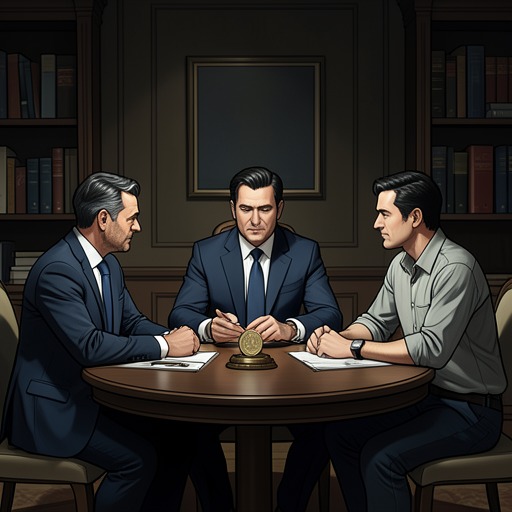
As his seventy-fifth birthday approached, Apostolos wanted to retire without splitting up his hotel empire. He did not want simply to hand it to Manos because he was the elder son, so he devised a business test for the brothers. On 13 October, during a family birthday dinner, he announced that two undeveloped sites in Patras would be divided by a coin toss. The son whose hotel performed better would inherit the group. The drachma gave Stephanos the beach site, while Manos received the plot near the port.
The choice of date acquired a significance that outlasted the dinner. Waiters muttered that the thirteenth was unlucky, especially in Greece, and connected the number to 1453, whose digits add up to thirteen. The brothers nevertheless proceeded with their father’s challenge. Their two hotels were due to open on the same date, 29 May, and their parents attended the rival launch parties before swapping locations. The coincidence between the openings and later disaster became a lasting point of reference in Patras.
Building and Operating the Thalassa
A keen swimmer, Stephanos regarded a beach hotel as a natural project. Unlike Manos, who adapted an existing office block, he started from an empty site and had just over six months to build and furnish his hotel before the summer tourist season. The Thalassa followed a plain, unadorned model associated with his father’s earlier approach: simple rooms looked out to sea. Construction proceeded at record speed, and Stephanos kept costs to a minimum, expecting that low building expenses would strengthen the hotel’s accounts.
The hotel’s business model was seasonal. Its guests received relatively little in the way of amenities, but the beach bar sold cold drinks throughout the day and visitors paid high prices for water-skiing. Because it needed to operate for only six months each year, the Thalassa was booming while Manos’s more elaborate Hotel Pyrgos struggled to remain profitable through the winter. The contrast sharpened the stakes of the brothers’ contest: Stephanos’s restrained spending initially appeared to be an advantage, while the consequences of the same economy in construction were not yet visible in the hotel’s accounts.
Collapse and Legal Consequences
One warm June night, about four in the morning, an earthquake measuring 4.3 struck. Guests had no fire escapes or instructions for an emergency. The Thalassa’s floors shifted, and the building collapsed within minutes, with upper floors falling through those below. Stephanos did not live at the hotel. Woken by the earthquake, he ran to the site and found it already in ruins; his immediate response was to flee in the opposite direction.
More than two hundred guests had been staying at the hotel. Thirty died and about a hundred were wounded. A forensic investigation found that the building had been constructed without proper regard for guest safety, and bereaved families and wounded survivors took Stephanos to court for negligence. The Thalassa’s construction was found to be substandard throughout. The contrast with the Hotel Pyrgos was stark: the earthquake had caused it only a single cracked window.
Stephanos was charged, and both brothers’ trials were scheduled to begin in Athens on their father’s seventy-seventh birthday. Instead of retiring and handing the empire to one son, Apostolos had to choose which son’s proceedings to attend. Seven months later, on 29 May—the date the hotels had opened—both brothers received manslaughter verdicts. The date’s recurrence encouraged people in Patras to interpret the outcome through the earlier warnings about the thirteenth and the opening day.
Ending and Narrative Significance
The Thalassa’s collapse ended Stephanos’s apparent advantage in the succession contest. The hotel that had prospered by limiting its season and construction costs became the source of deaths, injuries, and legal liability. Compensation for the victims and bereaved families exceeded what could be raised by selling the entire hotel empire, and Apostolos was forced to declare bankruptcy. The brothers’ competition therefore brought about neither a clear heir nor a transfer of a thriving business; it culminated in the loss of the family fortune.
For years, the remains of both hotels stood as reminders of the disaster. Older residents reproached the family for ignoring the significance of the date, linking the physical ruins to local superstition and religious belief. Stephanos’s story is thus shaped by a sharp reversal: the charm that made him his father’s preferred successor and the low-cost strategy that first made his hotel profitable could not protect him from the consequences of a building made without adequate regard for the people inside it.